
Why Total Health is Important
In a world that moves faster than ever, health and wellness have shifted from being “nice to have” goals to absolute necessities. Between demanding careers, digital overload, financial pressures, and constant exposure to global events, modern life places unprecedented strain on both our bodies and minds. The truth is simple: you cannot perform at your best, care for others effectively, or fully enjoy life if your health is neglected.
Total health and wellness go far beyond the absence of illness. They represent a balanced state of physical, mental, emotional, and even social well-being. According to the World Health Organization, health is defined as complete physical, mental, and social well-being — not merely the absence of disease. That definition is more relevant today than ever before.
Why Wellness Matters More Today
Modern society has created both convenience and risk. We have access to incredible technology, medical advances, and information — yet lifestyle-related health issues continue to rise. Sedentary work, processed foods, chronic stress, sleep deprivation, and social isolation are all contributing factors to declining wellness across many populations.
Organizations like the Centers for Disease Control and Prevention consistently report increases in chronic conditions such as obesity, diabetes, heart disease, anxiety, and depression. Many of these challenges are strongly influenced by daily habits — which means they are also preventable or manageable through intentional lifestyle choices.
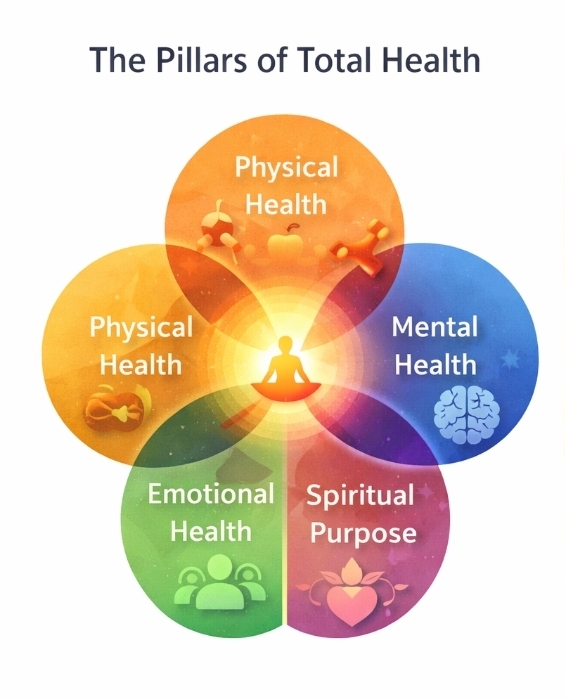
The Pillars of Total Health
True wellness is multi-dimensional. Focusing on only one area — like diet or exercise — without addressing the others often leads to burnout or imbalance. A sustainable approach includes:
Physical Health: Nutrition, movement, sleep, hydration, and preventive care
Mental Health: Stress management, focus, learning, and cognitive resilience
Emotional Health: Self-awareness, emotional regulation, and healthy coping strategies
Social Health: Relationships, community connection, and support systems
Spiritual or Purpose-Driven Health: Meaning, values, and fulfillment
When these areas align, energy increases, immunity strengthens, productivity improves, and overall life satisfaction rises.
Wellness Is Not Perfection — It’s Direction
One of the biggest misconceptions about health is that it requires extreme discipline or dramatic life overhauls. In reality, wellness is built through small, consistent choices repeated over time:
Choosing water instead of sugary drinks
Taking a 10-minute walk
Prioritizing sleep
Setting boundaries with work or technology
Practicing gratitude or mindfulness
These actions compound. Over weeks and months, they create measurable improvements in how you feel and function.
A Collective Responsibility
Health is personal, but it is also societal. Workplaces, communities, families, and industries all play roles in shaping environments that either support or undermine wellness. As awareness grows, there is increasing recognition that prevention, education, and lifestyle support are just as important as medical treatment.

Moving Forward
Investing in your health is not selfish — it is foundational. When you feel strong, clear-minded, and balanced, you show up better in every role you hold: professional, parent, partner, friend, and community member.
Total health and wellness are not destinations you reach once. They are ongoing journeys shaped by daily decisions. And in today’s fast-paced society, choosing that journey may be one of the most powerful decisions you can make.
Want to learn more on how to take control of your health? You can start by joining the Total Health Challenge. Just click the link below to get started TODAY!